We have a tendency in Britain to talk ourselves down, forgetting that we’re among the richest nations on Earth. This delf-deprecation is a peculiarly English trait, and its manifestation was brought into sharp perspective by anthropologist Kate Fox, who published the highly amusing Watching the English: the hidden rules of English Behaviour, published in 2004.
For racegoers longer in the tooth than millennials, Kate published an insightful and equally amu
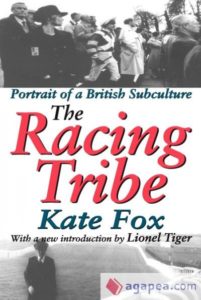
Kate Fox’s The racing Tribe (Published 1999)
sing look at horseracing 15 years earlier. The Racing Tribe, a study of the arcane world of British horseracing.
This Englishness manifested itself more recently in a lack of confidence by Thomas Tuchel’s England team against Argentina in the world cup semi-final, allowing us to gnash our teeth at the inadequacy of only reaching the final four.
I raise this issue because reading the trade press would have you believe that British racing is headed to hell in a handcart. And yet, it remains the second most popular sport in the UK, attendances are on the up, and racecourses are being at their most creative to bring people to our racecourses, despite the key revenue driver to the sport hampering its progress through so-called affordability checks.
Yet a glance at the racing in almost every other jurisdiction would tell you that the sport is facing headwinds almost everywhere, led by an erosion of its prevalence among betting options for those who like a punt. Listening to delegates from other European nations at the recent General Assembly of the European & Mediterranean Horseracing Federation, our problems are very much those of a First World nature.
Other than in France and Ireland, horseracing on the continent is a marginal sport; under 800 horses in training in total in Spain; around 300 in each of Belgium, the Czech Republic, Hungary and the Nordics, and under 200 in Romania, Switzerland, Spain and Portugal.
In fact, the Portuguese example is an exemplar in self-help: a racing jurisdiction without any state assistance or return from betting at all. The number of horses in training across all disciplines has grown from around 40 to 250 in 6 years, and the number of fixtures fourfold to 18. Prize money is paltry at no more than €1,000 per race, but enthusiastic community-based crowds of 500 or more cheer their favourites home with elan, and connections are pleased to receive their prizes in facilities more rudimentary than a British point-to-point.
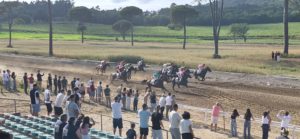
Flat racing at Ponte de Lima, Portugal
People will want to race and watch horses until the end of time. The motivations for going racing, or immersion in racehorse ownership are legion, and making money does not figure highly in any of them. Whilst in no way belittling the challenges facing British horseracing, it remains an enduring sport, with a heritage and a following other nations, including the United States, would die for. We should trumpet that success.
Not very English though is it?